Quick answer: The most common causes are broodiness (wanting to sit on eggs), being bullied by flock mates, illness or injury, bad weather, or general fearfulness in young or new chickens. Broody hens sit tight in the nest box and only leave briefly. Bullied hens hide but seem eager to be near the flock. Sick hens look withdrawn and often show other symptoms too. Telling these apart mostly comes down to where in the coop she’s hiding and how she behaves when she does come out.
A healthy, comfortable chicken wants to be outside scratching, foraging, and dust bathing. A chicken choosing to stay inside all day is telling you something, and figuring out what usually just takes a bit of observation.
Quick Diagnosis: Where Is She Hiding?
| Location & Behavior | Likely Cause |
|---|---|
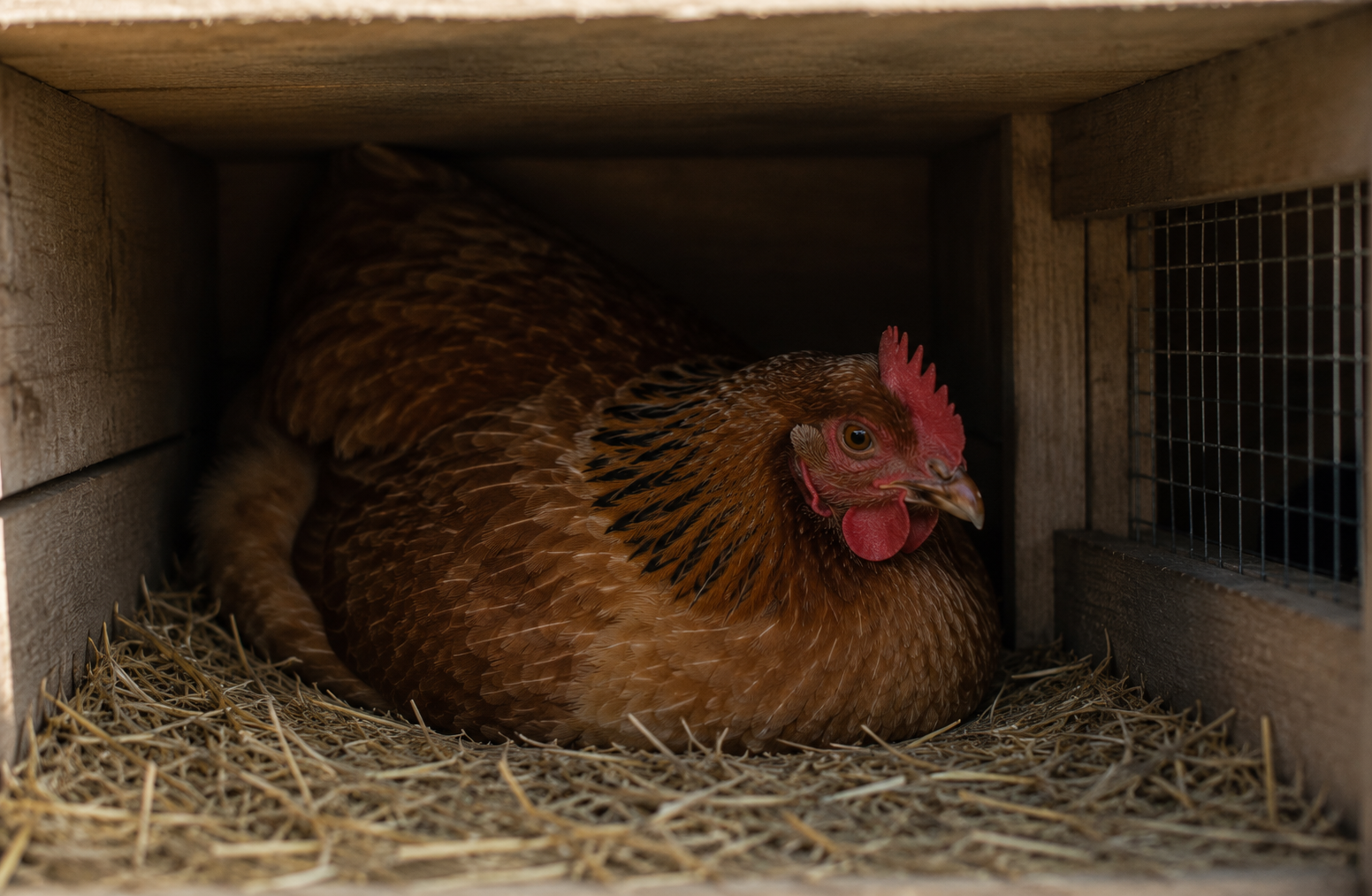
| Sitting tight in the nest box, puffed up, growls or bites when disturbed | Broody |
| Hiding in a corner, flinches or runs from other chickens | Bullying |
| Hunched, isolated, not moving much, feathers ruffled | Illness or injury |
| Staying in during rain, wind, or extreme cold | Weather avoidance |
| New or young bird staying near the door, easily startled | Fear/inexperience |
Cause #1: Broodiness
This is one of the most common reasons, especially in spring and summer. A broody hen has decided to sit on eggs (fertilized or not) in hopes of hatching them.
Signs:
- Sitting tightly in the nest box for most of the day
- Puffed-up feathers, especially when approached
- Growling, hissing, or pecking if you try to move her
- Leaving the nest only briefly, once a day or so, to eat, drink, and defecate
- A noticeably large, smelly dropping when she does leave (this is normal for broody hens)
What to do: If you don’t want chicks, gently and repeatedly remove her from the nest box, block access to it temporarily, and remove any accumulated eggs. If you do want chicks, ensure she has access to food, water, and safety while she sits.
Cause #2: Bullying
If a hen is hiding but seems to want to be near the rest of the flock, and gets chased off or pecked when she tries, bullying is a strong possibility.
Signs:
- Missing feathers, especially on the back or neck
- Visibly afraid of specific flock mates
- Being kept away from food or water by other hens
- Hiding in corners rather than the nest box specifically
What to do: Add extra feeding stations so she isn’t blocked from resources. Consider isolating the bully temporarily rather than the victim, since removing the victim can just lower her status further when reintroduced. Check for overcrowding, since insufficient space is a common trigger for bullying.
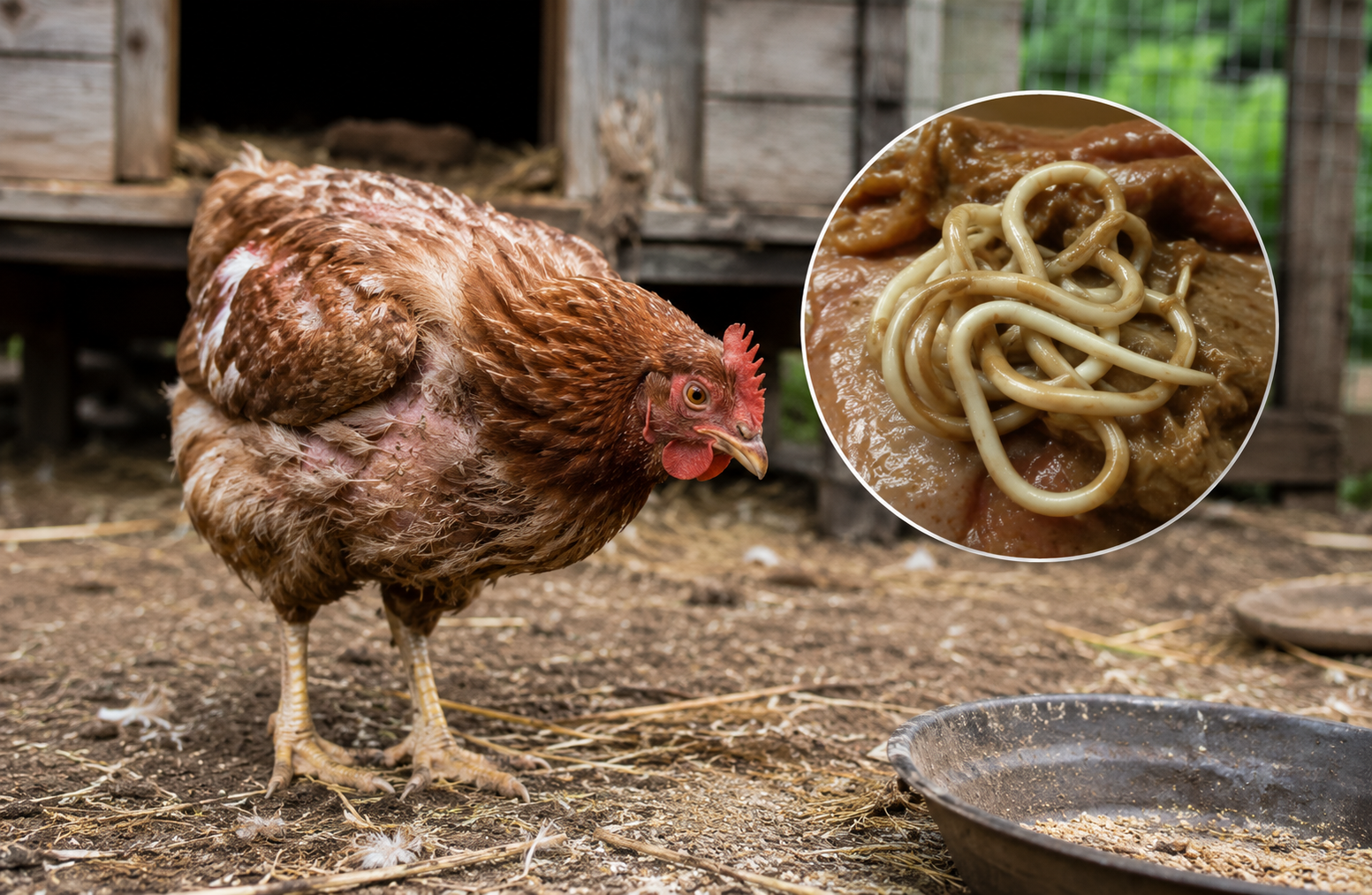
Cause #3: Illness or Injury
Chickens are prey animals and instinctively hide signs of weakness, so a hen retreating to the coop can be one of the more visible signs that something is wrong.
Signs:
- Hunched posture, fluffed feathers even in warm weather
- Reduced appetite or thirst
- Lethargy, reluctance to move
- Pale comb, discharge, or visible injury
- Isolating even from a flock that isn’t bullying her
What to do: Do a hands-on check for injuries, parasites, or abnormal droppings. If you find nothing obvious but she still seems unwell, isolating her for a few days of rest and observation is reasonable, and a vet visit is warranted if symptoms persist or worsen.
Cause #4: Weather
Chickens generally dislike rain, strong wind, and extreme cold, and will often just wait it out inside rather than venture into the run.
Signs:
- Staying in only during bad weather, back to normal once it clears
- No other symptoms of illness or bullying
- Whole flock (not just one hen) staying inside
What to do: This is normal behavior and doesn’t need correcting. It’s fine for chickens to stay inside for a day during bad weather, but more than about 24 hours in the same enclosed space increases the risk of squabbling and poor air quality from ammonia buildup, so try to get them out once conditions improve.
Cause #5: Fear or Inexperience
Young chickens recently moved from a brooder, or any chicken new to a coop and run setup, may simply be intimidated by the outdoors and choose to stay inside where it feels safe.
Signs:
- Young age or recent arrival to the flock
- Staying near the coop door rather than a specific hiding spot
- Gradually becoming more confident over days to weeks
- No signs of illness or aggression from other birds
What to do: Short, supervised trips outside in good weather help build confidence. This usually resolves on its own as the bird settles in.
One Hen vs. Whole Flock
| Pattern | What It Suggests |
|---|---|
| One hen only, otherwise healthy flock | Broodiness, bullying, or individual illness |
| Whole flock staying inside | Weather, predator scare, or ammonia/air quality issue in the coop |
| New or young bird only | Fear/inexperience, likely to resolve with time |
When to Be More Concerned
Check in more urgently if you notice:
- A hen not eating or drinking at all for over 24 hours
- Visible injury, bleeding, or limping
- Labored breathing or discharge from eyes/nose
- Sudden, severe lethargy or collapse
- Signs of predator activity around the coop
These go beyond typical hiding behavior and warrant a closer look or a vet visit.
FAQ
Occasionally, yes, especially during bad weather or a brief broody spell. More than 24 hours consistently is worth investigating further, since prolonged confinement can lead to bullying and poor air quality.
A broody hen is alert, puffs up defensively, and often growls or pecks if disturbed. A sick hen is usually withdrawn, less reactive, and may show other symptoms like reduced appetite or abnormal droppings.
emporarily isolating the bully, rather than the victim, tends to work better long-term. Removing the victim can lower her status further when she’s reintroduced.
Bottom Line
A chicken hiding in the coop is communicating something, whether that’s “I want to hatch eggs,” “I’m being bullied,” “I don’t feel well,” or simply “it’s nasty outside.” Watching where she hides and how she behaves when she comes out usually points clearly to the cause, and most of these situations resolve with a fairly simple fix.