samiversity

Birds

how-to-tell-if-your-chicken-has-worms-5-clear-signs-fixes
DUCK, poultry

How to Tell if Your Chicken Has Worms: 5 Clear Signs & Fixes

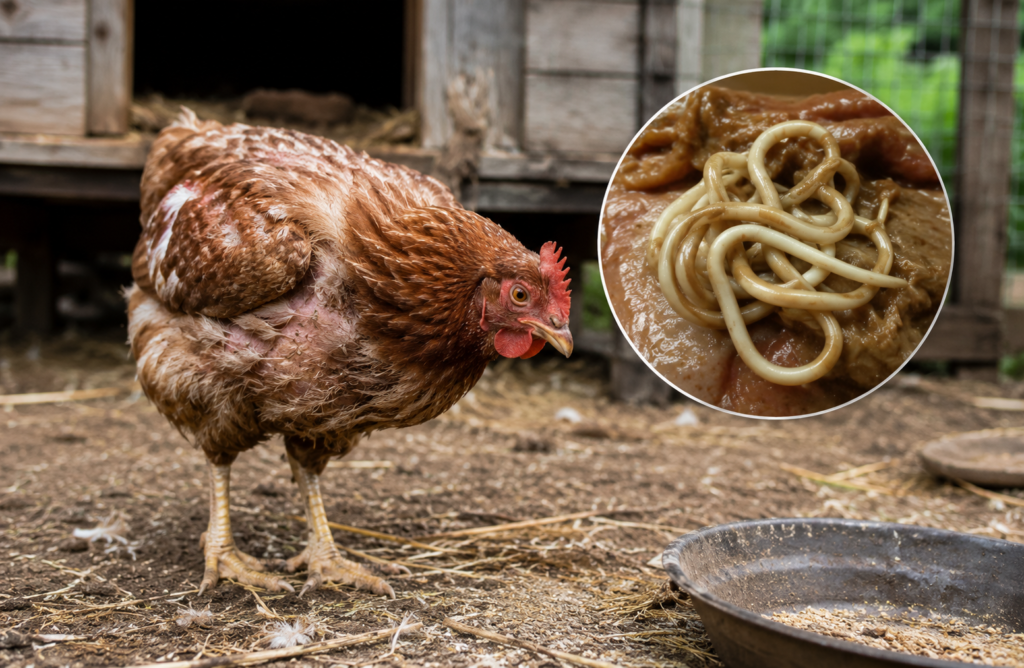
You can tell if your chicken has worms by checking for weight loss, pale egg yolks, diarrhea, and respiratory gasping. However, the only 100% accurate method is a veterinary fecal float test. Here are the exact clinical signs to look for in your flock. What You Need to Know Internal parasites (worms) are an almost unavoidable part of keeping backyard chickens. They pick up worm eggs from the soil, insects, or wild bird droppings. The Simple Analogy: Think of worms as microscopic thieves living inside your chicken’s digestive tract or lungs. They are stealing the nutrients your hen needs to lay eggs, stay warm, and fight off diseases. The biggest mistake flock owners make is waiting for obvious symptoms. By the time a chicken looks visibly sick, the “thieves” have already multiplied into a massive burden. As a veterinarian, I always tell my clients: Do not guess; test. But knowing the clinical signs will tell you exactly when it is time to call the lab. The 5 Clear Signs Your Chicken Has Worms 1. Weight Loss Despite a Good Appetite (The “Free-Loader” Effect) If your hen is eating enthusiastically but her body feels bony, her breastbone is sharp, or she is losing weight, worms are the prime suspect. 2. A Drop in Egg Production and Pale Yolks When a chicken’s body is under attack by parasites, it goes into survival mode. It stops diverting energy to the reproductive system (laying eggs) and focuses entirely on staying alive. 3. Respiratory Distress and “The Gape” This is the hallmark sign of a very specific, dangerous parasite: the Gapeworm (Syngamus trachea). Unlike intestinal worms, gapeworms live in the chicken’s trachea (windpipe). 4. Changes in Droppings (Diarrhea or Bloody Poop) While normal chicken poop varies in color based on diet, worm infections can cause distinct changes. 5. Pale Comb and Wattles (Anemia) If your hen’s normally bright red comb and wattles look pink, pale, or almost white, she is anemic. Clinical Insight: The Veterinarian’s Perspective From the Merck Veterinary Manual:“Diagnosis of nematode (roundworm) infections in poultry is confirmed by identifying eggs in the feces via flotation techniques. However, clinical signs of parasitism (weight loss, diarrhea, decreased egg production) typically only manifest when the worm burden is high. Gapeworms (Syngamus trachea) cause severe respiratory distress (‘gaping’) and can be fatal. Treatment requires specific anthelmintics, but drug resistance is an increasing concern in poultry, making targeted treatment based on fecal egg counts essential.” From Blackwell’s Five-Minute Veterinary Consult (Avian) & Diseases of Poultry:“When evaluating a flock for internal parasitism, the clinician must emphasize that visual inspection of feces for adult worms is highly unreliable, as most poultry nematodes are small and shed eggs microscopically. A quantitative fecal egg count (FEC) is the gold standard for determining the need for anthelmintic therapy. Blind or routine deworming without diagnostic confirmation accelerates anthelmintic resistance.” Actionable Takeaways: What to Do Right Now Step 1: Get a Fecal Float Test (The Gold Standard) You cannot treat what you haven’t diagnosed. Collect fresh droppings from your flock (mix a few samples from different birds) in a ziplock bag. Keep it cool and take it to your veterinarian. They will perform a fecal flotation test, which separates the microscopic worm eggs from the fecal matter so they can be seen under a microscope. This tells you exactly which worm you have and how many. Step 2: Listen for “The Gape” Walk into your run early in the morning when it is quiet. Listen closely to your flock. If you hear any clicking, wheezing, or see a bird stretching its neck to gasp, isolate that bird immediately. Gapeworms are highly contagious and require specific, targeted treatment (like ivermectin or fenbendazole) prescribed by your vet. Step 3: Implement Pasture and Coop Management Worm eggs thrive in warm, moist, shady environments. Step 4: Use Targeted Dewormers Once your vet confirms the type of worm, they will prescribe the correct anthelmintic (dewormer). Samiversity FAQ: Your Worm Questions Answered Q: Can I see worms in my chicken’s poop? A: Rarely. The most common intestinal worms (like roundworms and cecal worms) are very small, and the chicken sheds microscopic eggs in the feces, not the adult worms. You would need a microscope to see them. The only time you might see adult worms in the poop is if the bird has a massive, severe infestation, or after you have successfully administered a dewormer. Q: Can humans get worms from chickens? A: The common intestinal worms that affect chickens (roundworms, gapeworms, cecal worms) are species-specific and do not infect humans. However, chickens can carry bacteria like Salmonella and Campylobacter on their feathers and feet, which can transfer to your hands. Always wash your hands thoroughly with soap and water after handling your flock or cleaning the coop. Q: How often should I deworm my flock? A: You should not deworm on a blind schedule (like every 3 months). Routine, unnecessary deworming is the primary cause of parasite resistance. Instead, perform a fecal test in the spring and fall. Only deworm if the test shows a high worm egg count. If your coop is kept very clean, dry, and your birds are not overcrowded, they may never need chemical dewormers. Q: Are the eggs safe to eat if my chicken has worms? A: Yes, the worms themselves do not pass into the eggs, so the eggs are safe to eat. However, if you treat your chickens with a deworming medication, you must follow the medication’s “egg withdrawal” period. Depending on the drug and whether it is approved for laying hens, you may need to throw away the eggs for 7 to 14 days after treatment. Always consult your vet for the exact withdrawal time. Veterinary References This article is grounded in established veterinary parasitology and poultry medicine. For further reading, consult: The Bottom Line: Test, Don’t Guess Internal parasites are a natural part of the chicken-keeping environment, but they don’t have to compromise your flock’s health. The biggest takeaway from

Birds, poultry

Why Is My Rooster Suddenly Attacking Me? 4 Causes & How to Stop It

A rooster suddenly attacking you is almost always triggered by a surge in testosterone as he reaches maturity, a perceived threat to his flock, or an underlying illness causing him pain. It is a natural instinct, not personal malice, but it requires immediate behavioral correction to keep you safe. Here is the veterinary science behind why your rooster turned on you and exactly how to stop it. What You Need to Know It is incredibly disheartening when a rooster you hand-raised and loved suddenly starts drawing blood. But as a veterinarian, I need you to understand one crucial fact: Your rooster does not hate you. In the avian world, aggression is a tool used to establish hierarchy, protect resources, and defend the flock. When a rooster attacks you, he is simply applying his natural biological programming to a situation where he feels he needs to assert dominance, protect his hens, or defend himself because he feels vulnerable. To fix the behavior, we have to stop taking it personally and start looking at the biological trigger. The 4 Main Causes of Sudden Rooster Aggression 1. The Puberty Pivot (Hormonal Surges) If your rooster is between 5 and 8 months old, his sudden aggression is almost certainly hormonal. As he reaches sexual maturity, his testosterone levels skyrocket. He is no longer a baby chick; he is biologically driven to become the undisputed king of the flock. 2. The “Protector” Instinct (Perceived Threat) Roosters are hardwired to guard their hens against predators. If you move too quickly, wear a wide-brimmed hat, carry a large object (like a bucket or a rake), or enter the coop unexpectedly, his brain categorizes you as a predator. 3. Redirected Aggression (Frustration) This is a fascinating and dangerous behavioral quirk. Sometimes, a rooster sees a rival rooster, a hawk, or a dog outside the fence. He becomes highly aroused and aggressive, wanting to fight the intruder. 4. Pain or Illness (The Medical Red Flag) If your rooster is older, has been sweet for years, and suddenly becomes aggressive out of nowhere, do not assume it is a behavioral issue. Assume it is a medical one. Clinical Insight: The Veterinarian’s Perspective “Aggression in poultry, particularly in male birds, is a natural behavior driven by social hierarchy and mating instincts. However, a sudden onset of severe aggression in an previously docile adult bird must prompt a thorough physical examination to rule out pain-induced aggression. Orthopedic pain, pododermatitis (bumblefoot), or systemic illness can lower the threshold for aggressive responses as the bird attempts to protect a compromised physical state.” “When evaluating a suddenly aggressive rooster, the clinician must differentiate between normal hormonal/maternal aggression and pathological aggression. Medical differentials include painful conditions (arthritis, trauma, infections) or, rarely, neurological disorders causing behavioral changes. If medical causes are ruled out, the diagnosis is behavioral. Management of behavioral aggression involves environmental modification, establishing human dominance without physical retaliation, and in severe, untreatable cases, culling for human safety.” Actionable Takeaways: What to Do Right Now Step 1: Rule Out Pain (The Vet Visit) If this is an older rooster who suddenly turned mean, schedule a veterinary exam. Check his feet for bumblefoot, feel his legs for swelling, and observe his droppings. If he is in pain, treating the medical issue will often cure the aggression. Step 2: Establish Dominance (The “Shield” Method) If he is healthy and just being a bully, you must win the hierarchy battle. Never run away, and never hit him. Running triggers his prey-drive; hitting him makes him fear you, which makes him more dangerous. Step 3: The Water Spray Deterrent If he starts his “dance” (dropping his wing and circling), do not wait for him to attack. Keep a spray bottle filled with plain water in your pocket. The second he drops his wing, give him a sharp spray of water to the face. It startles them, breaks their focus, and is completely harmless. Over time, he will associate attacking you with an unpleasant shower. Step 4: Manage the Environment Samiversity FAQ: Your Rooster Aggression Questions Answered Q: Should I hit my rooster back to show him who is boss? A: No. Hitting, kicking, or physically punishing a rooster is highly dangerous and counterproductive. It does not teach him respect; it teaches him fear. A fearful rooster is a unpredictable rooster who will attack you with much more intensity because he believes he is fighting for his life. Use the “shield” and “immobilization” methods instead. Q: Why does my rooster attack me but not my husband/wife? A: Chickens have excellent facial recognition and understand individual hierarchy. He has likely assessed that your spouse is more dominant than you, or your spouse’s body language (walking taller, moving slower) commands more respect. To change this, you must alter your body language: walk confidently, make direct eye contact, and do not step around him if he is in your way. Make him move. Q: At what age do roosters become aggressive? A: Most roosters begin showing territorial and hormonal aggression between 5 and 8 months of age, as they reach sexual maturity. This is the critical window where you must establish your dominance. If you let him win the hierarchy battles at 6 months old, he will be a permanent bully at 2 years old. Q: Can I “neuter” my rooster to stop the aggression? A: Veterinary castration (removing the testicles, which are located inside the bird’s abdomen near the spine) is a highly invasive, risky surgery that is rarely performed in modern poultry medicine due to the high risk of fatal complications. Furthermore, behavioral modification and environmental management are the veterinary standards for handling aggression. If a rooster is severely, dangerously aggressive and cannot be rehabilitated, rehoming or culling is the safest option. Veterinary References This article is grounded in established veterinary behavioral medicine and poultry science. For further reading, consult: The Bottom Line: Respect the Instinct, Correct the Behavior It is heartbreaking when a rooster you raised from a fluffy chick

Why-Is-My-Chicken-hiding-in-the-Coop-All-Day?
poultry

Why Is My Chicken Hiding in the Coop All Day?

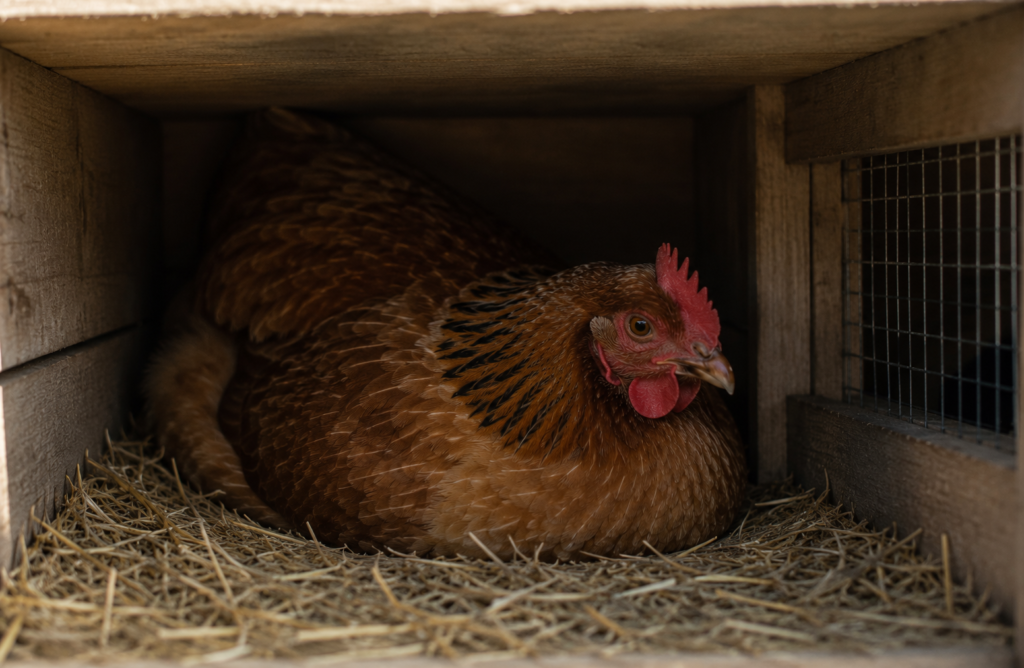
Quick answer: The most common causes are broodiness (wanting to sit on eggs), being bullied by flock mates, illness or injury, bad weather, or general fearfulness in young or new chickens. Broody hens sit tight in the nest box and only leave briefly. Bullied hens hide but seem eager to be near the flock. Sick hens look withdrawn and often show other symptoms too. Telling these apart mostly comes down to where in the coop she’s hiding and how she behaves when she does come out. A healthy, comfortable chicken wants to be outside scratching, foraging, and dust bathing. A chicken choosing to stay inside all day is telling you something, and figuring out what usually just takes a bit of observation. Quick Diagnosis: Where Is She Hiding? Location & Behavior Likely Cause Sitting tight in the nest box, puffed up, growls or bites when disturbed Broody Hiding in a corner, flinches or runs from other chickens Bullying Hunched, isolated, not moving much, feathers ruffled Illness or injury Staying in during rain, wind, or extreme cold Weather avoidance New or young bird staying near the door, easily startled Fear/inexperience Cause #1: Broodiness This is one of the most common reasons, especially in spring and summer. A broody hen has decided to sit on eggs (fertilized or not) in hopes of hatching them. Signs: What to do: If you don’t want chicks, gently and repeatedly remove her from the nest box, block access to it temporarily, and remove any accumulated eggs. If you do want chicks, ensure she has access to food, water, and safety while she sits. Cause #2: Bullying If a hen is hiding but seems to want to be near the rest of the flock, and gets chased off or pecked when she tries, bullying is a strong possibility. Signs: What to do: Add extra feeding stations so she isn’t blocked from resources. Consider isolating the bully temporarily rather than the victim, since removing the victim can just lower her status further when reintroduced. Check for overcrowding, since insufficient space is a common trigger for bullying. Cause #3: Illness or Injury Chickens are prey animals and instinctively hide signs of weakness, so a hen retreating to the coop can be one of the more visible signs that something is wrong. Signs: What to do: Do a hands-on check for injuries, parasites, or abnormal droppings. If you find nothing obvious but she still seems unwell, isolating her for a few days of rest and observation is reasonable, and a vet visit is warranted if symptoms persist or worsen. Cause #4: Weather Chickens generally dislike rain, strong wind, and extreme cold, and will often just wait it out inside rather than venture into the run. Signs: What to do: This is normal behavior and doesn’t need correcting. It’s fine for chickens to stay inside for a day during bad weather, but more than about 24 hours in the same enclosed space increases the risk of squabbling and poor air quality from ammonia buildup, so try to get them out once conditions improve. Cause #5: Fear or Inexperience Young chickens recently moved from a brooder, or any chicken new to a coop and run setup, may simply be intimidated by the outdoors and choose to stay inside where it feels safe. Signs: What to do: Short, supervised trips outside in good weather help build confidence. This usually resolves on its own as the bird settles in. One Hen vs. Whole Flock Pattern What It Suggests One hen only, otherwise healthy flock Broodiness, bullying, or individual illness Whole flock staying inside Weather, predator scare, or ammonia/air quality issue in the coop New or young bird only Fear/inexperience, likely to resolve with time When to Be More Concerned Check in more urgently if you notice: These go beyond typical hiding behavior and warrant a closer look or a vet visit. FAQ Bottom Line A chicken hiding in the coop is communicating something, whether that’s “I want to hatch eggs,” “I’m being bullied,” “I don’t feel well,” or simply “it’s nasty outside.” Watching where she hides and how she behaves when she comes out usually points clearly to the cause, and most of these situations resolve with a fairly simple fix.

5-vet-approved-fixes-for-white-runny-duck-droppings
Birds, poultry

5 Vet-Approved Fixes for White, Runny Duck Dropping

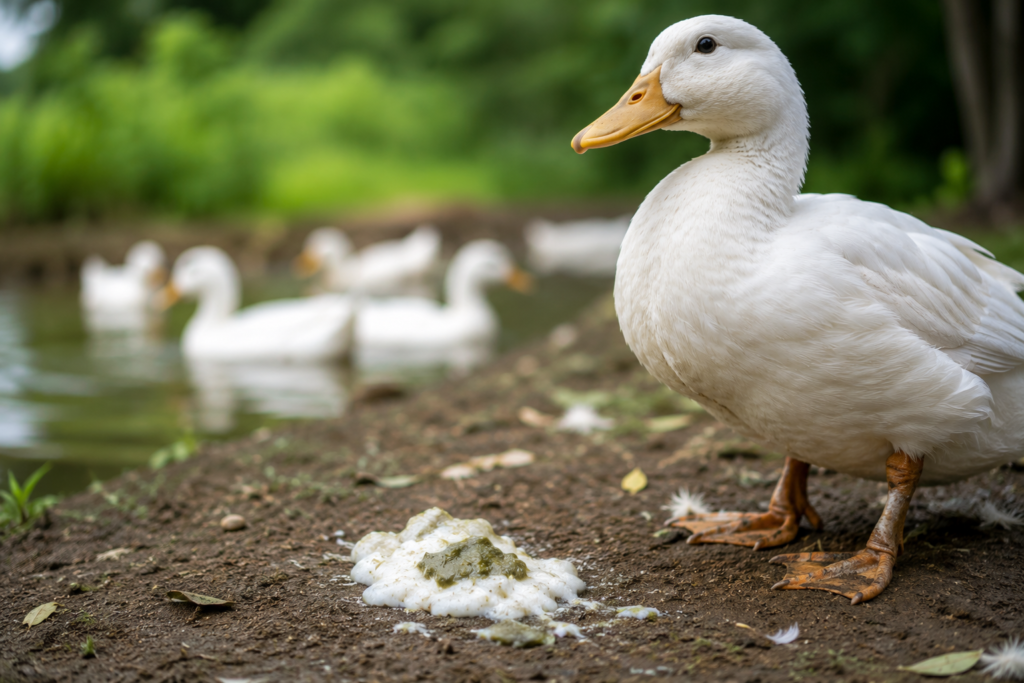
White and runny duck poop is most commonly caused by normal cecal droppings (which are healthy), but it can also signal serious health issues like bacterial infections, viral diseases, liver dysfunction, or parasitic infestations. If the white diarrhea is accompanied by lethargy, loss of appetite, or green/yellow discharge, it is an emergency condition. In this article, I will break down exactly what your duck’s droppings are telling you and when you need to act. What You Need to Know Duck poop is surprisingly complex, and not all white droppings are a cause for panic. Ducks actually produce two distinct types of poop: 1-Intestinal Droppings 2- Cecal Droppings Feature Intestinal Droppings Cecal Droppings Origin Small intestine and large intestine Cecum (paired ceca) Frequency Most droppings (about 80–90%) Usually 1–3 times per day Appearance Firm, tubular or coiled Soft, pasty, sticky Color Brown, green, or tan with a white urate cap Dark brown to chocolate brown, whitish yellow or even black White Urates Usually present on top Usually absent or very little Odor Mild Stronger, more pungent odor Consistency Well-formed Semi-liquid, pudding-like Contents Undigested food residues and uric acid Fermented material(Fber), bacteria, and cecal contents Think of your duck’s digestive system like a house with two bathrooms. One bathroom (the intestines) is used constantly throughout the day and produces the normal, firm, brownish-green droppings. The other bathroom (the ceca) is only used occasionally, usually in the morning, and produces a much softer, frothy, whitish-yellow “poop” that looks completely different. However, when white, runny droppings are produced constantly (not just occasionally), or when they are accompanied by other symptoms like lethargy or loss of appetite, it means something is wrong. As a veterinarian, I see duck owners panic over normal cecal droppings, but I also see them ignore dangerous white diarrhea until it is too late. Let’s learn the difference. The 5 Main Causes of White and Runny Duck Poop 1. Normal Cecal Droppings (The “False Alarm”) This is the most common reason duck owners panic unnecessarily. Ducks have two blind pouches at the junction of their small and large intestines called ceca. These pouches ferment fibrous material and are emptied only every 3 to 4 hours, usually in the morning. 2. Bacterial Infections (The Dangerous Culprit) When white, runny diarrhea is produced constantly (not just occasionally), bacterial infection is the prime suspect. Common pathogens include: The Science: These bacteria damage the intestinal lining, preventing proper absorption of nutrients and water. The white color often comes from excess urates (the white part of bird poop) mixing with watery intestinal contents, or from undigested fats that the damaged gut cannot absorb. 3. Viral Diseases (The Silent Killers) Several viral infections cause severe white or greenish-white diarrhea in ducks: The Vet Reality: Viral diseases are often fatal and highly contagious. There is no specific cure; treatment is supportive (fluids, warmth, nutrition) while the duck’s immune system fights the virus. Prevention through biosecurity and vaccination (where available) is critical. 4. Liver Disease and Dysfunction The liver is responsible for processing bilirubin and other pigments that give poop its normal brownish-green color. When the liver is damaged or diseased, these pigments are not processed correctly, and the droppings turn pale, white, or clay-colored. 5. Parasitic Infestations Internal parasites can damage the intestinal lining and cause malabsorption, leading to white, runny droppings. Clinical Insight: The Veterinarian’s Perspective From the Merck Veterinary Manual:“Abnormal fecal consistency and color in waterfowl can indicate a variety of infectious and non-infectious diseases. White, watery droppings may be associated with bacterial infections such as pasteurellosis (fowl cholera), colibacillosis, or salmonellosis. Viral diseases including duck viral enteritis and duck virus hepatitis also cause characteristic diarrhea. Differentiation from normal cecal droppings is essential; cecal droppings are typically passed once or twice daily, are frothy and brownish-yellow, and the bird otherwise appears healthy. Persistent white diarrhea accompanied by depression, anorexia, or increased mortality warrants immediate veterinary investigation and diagnostic testing including bacterial culture, PCR for viral pathogens, and fecal flotation for parasites.” From Blackwell’s Five-Minute Veterinary Consult (Avian) & Diseases of Poultry:“When evaluating abnormal droppings in domestic waterfowl, the clinician must first distinguish between normal cecal evacuation and pathological diarrhea. Hepatic disease can result in acholic (pale, clay-colored) feces due to impaired bilirubin metabolism. Bacterial enteritis commonly produces white, watery droppings with high urate content. Diagnostic workup should include fecal examination, bacterial culture and sensitivity, and assessment of liver enzymes. Supportive care with fluid therapy, nutritional support, and appropriate antimicrobials (based on culture results) is indicated for infectious causes.” What this means for you: The textbooks are unanimous: you cannot diagnose the cause of white poop just by looking at it. You must observe the whole duck. Is she acting normal? Eating? Drinking? Or is she huddled, fluffed up, and refusing food? The difference between normal cecal droppings and deadly duck plague could be just one symptom, so observation is critical. Chart Of Differential Diagnosis Disease Cause Age Affected Droppings Key Clinical Signs Distinguishing Features Diagnosis Pullorum Disease Salmonella Pullorum Mainly ducklings (<3 weeks) Chalky white, pasty diarrhea Depression, huddling, vent pasting, weakness, high mortality Classic white diarrhea with pasted vent in young birds Culture, PCR, serology Salmonellosis (Paratyphoid) Salmonella Typhimurium, S. Enteritidis, etc. All ages (young more susceptible) White, yellow, or green diarrhea Septicemia, dehydration, swollen joints, reduced growth Less vent pasting than Pullorum; may have enlarged liver and spleen Culture, PCR Colibacillosis Avian pathogenic E. coli All ages White to watery diarrhea (occasionally) Respiratory signs, airsacculitis, septicemia, swollen joints Respiratory disease usually accompanies diarrhea Culture, necropsy Kidney Disease (Nephritis) Bacterial, viral, or toxic kidney damage All ages Mostly white urates with little feces Excessive drinking, weight loss, depression White material is urates, not true diarrhea Blood biochemistry, necropsy Visceral/Articular Gout Hyperuricemia due to renal failure All ages White chalky urates Lameness, dehydration, weakness White urates plus chalky deposits on organs or joints Necropsy, histopathology Duck Viral Hepatitis Duck hepatitis virus Ducklings (<4 weeks) Sometimes white or watery Sudden death, opisthotonos (head thrown back), tremors

Scroll to Top

Get Premium Vet. Content For Free