If you’ve spent any time in backyard chicken forums or Facebook groups, you’ve seen the advice a hundred times: feed your flock pumpkin seeds, add garlic to the waterer, sprinkle diatomaceous earth in their feed, and your worm problems will take care of themselves. It’s repeated so often, by so many confident voices, that it’s easy to assume it must be settled science.
It isn’t.
When you actually go looking for controlled research testing these remedies directly in chickens, the evidence is thin, and in the one study that’s tested this question head-on, it didn’t hold up. That doesn’t mean every natural remedy is useless, or that you need to reach for a chemical dewormer every time you see a chicken looking a little off. But it does mean the confident claims circulating online are built on a much shakier foundation than most flock owners realize — and understanding why matters if you actually want to keep your birds healthy rather than just feel like you’re doing something.
Why Worms Are Worth Taking Seriously in the First Place
Almost every backyard flock carries some level of intestinal worm burden. That’s normal, not alarming. A worm infection isn’t like a bacterial or viral infection — the parasites don’t multiply inside the chicken’s body. Instead, a bird picks up worm eggs or larvae from contaminated ground or droppings, those mature inside the gut, and new eggs get shed back into the environment through the chicken’s own waste. The cycle repeats, and how serious it gets largely comes down to how much infective material a bird is exposed to over time.
In a well-managed coop with dry bedding, reasonable space, and rotated ground, chickens and a low-level worm population often settle into a kind of truce. The birds show no visible symptoms, and you’d never know worms were present without a fecal test. The trouble starts when that balance tips — overcrowding, damp bedding, birds confined to the same patch of ground year after year, or an unrelated illness weakening the immune system all let worm numbers climb past what a bird can tolerate.
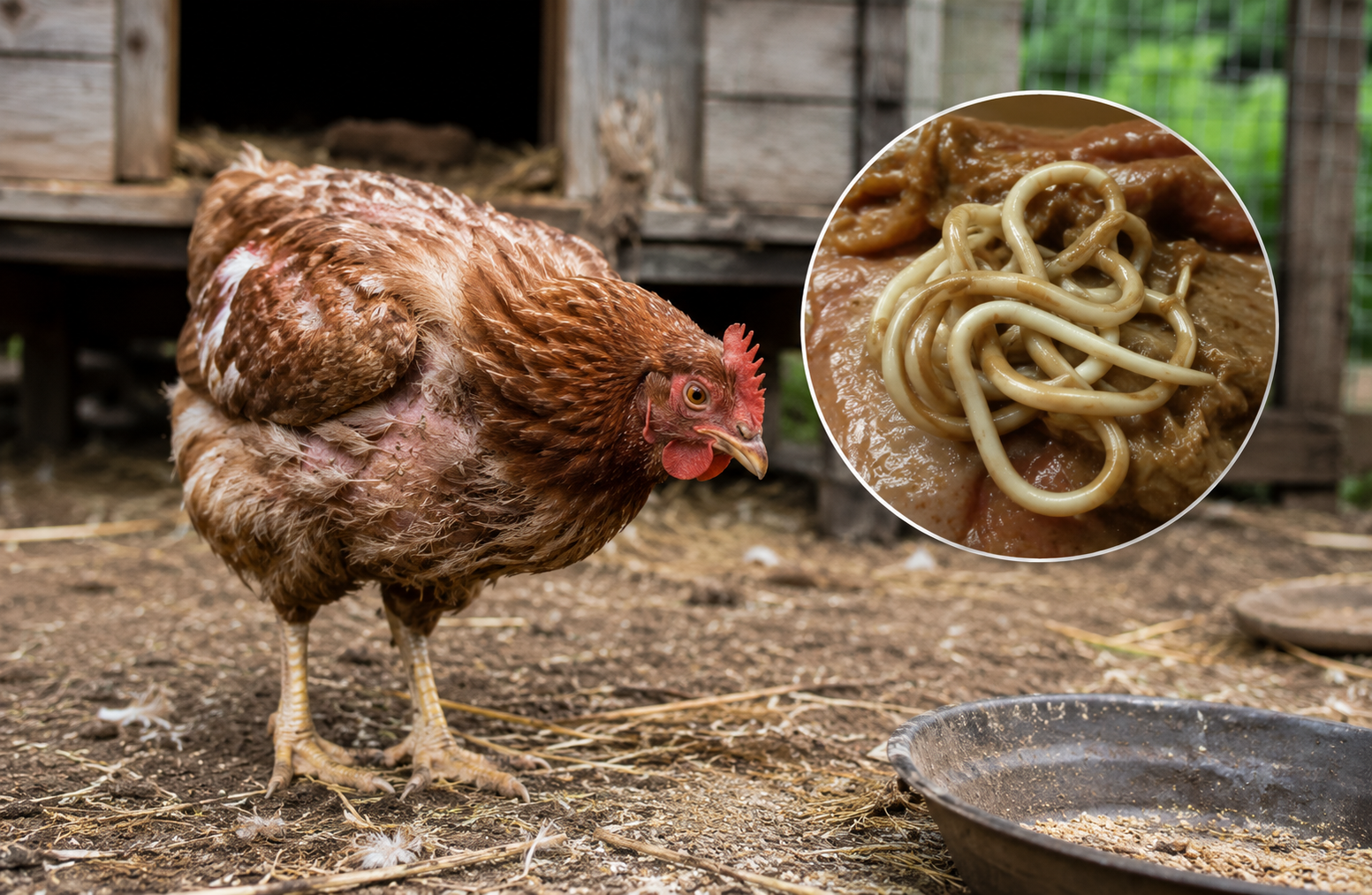
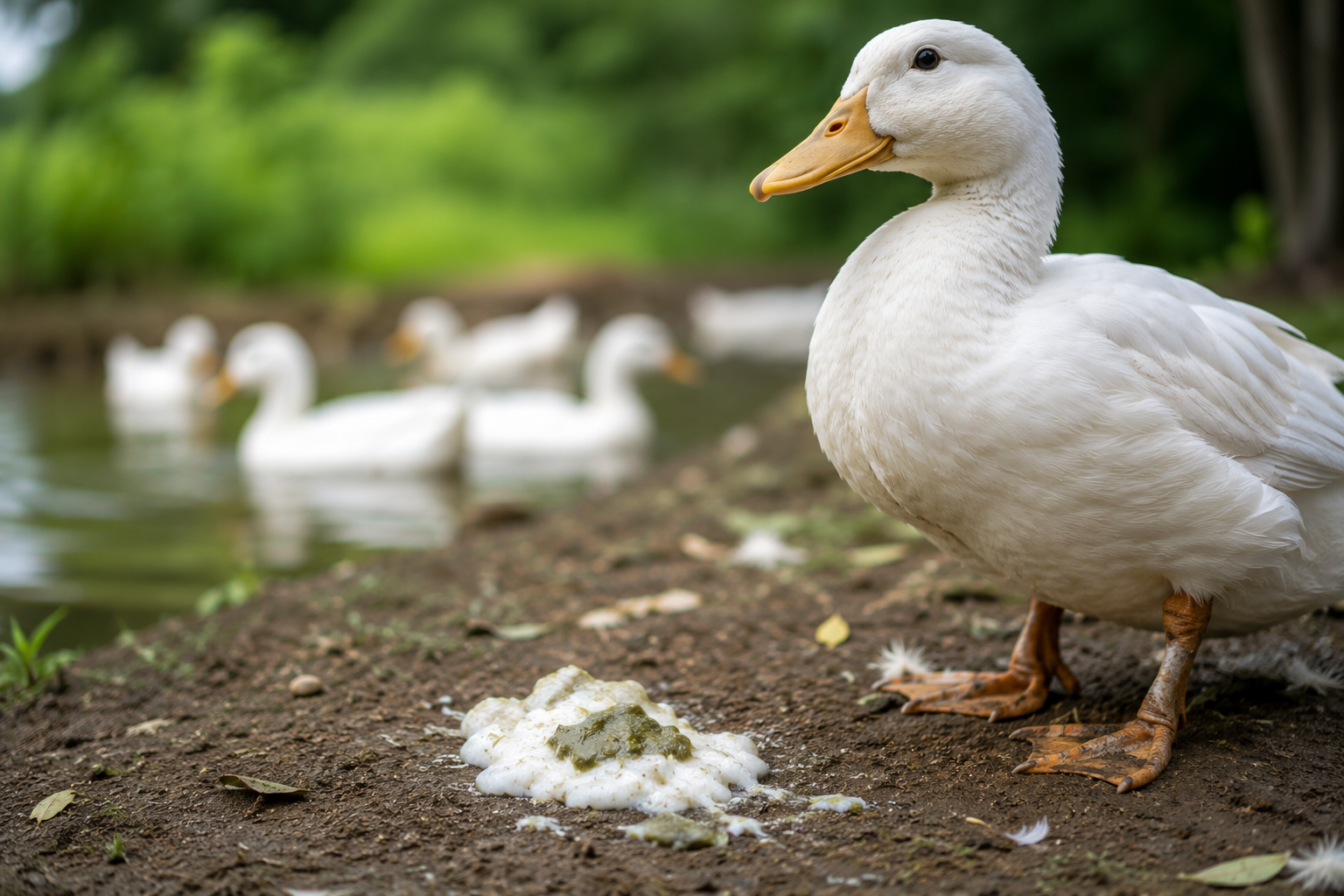
At that point, the effects show up gradually rather than suddenly, which is part of why they’re easy to miss early on. Watch for a pale comb, weight loss or slow growth in young birds, diarrhea with unusually white urates, dry and ruffled feathers, or a drop in egg production. In a heavy, untreated infestation, worms can physically block the intestine, and the outcome can be fatal. Roundworms tend to be the bigger overall threat simply because more species affect more parts of the body — eyes, windpipe, crop, gizzard, intestine — while tapeworms, though common, are generally less destructive but notoriously harder to treat effectively.
The Remedies Everyone Recommends — And What Actually Backs Them Up
Here’s where it gets uncomfortable for anyone who’s built their parasite-control routine entirely around kitchen-cabinet ingredients.
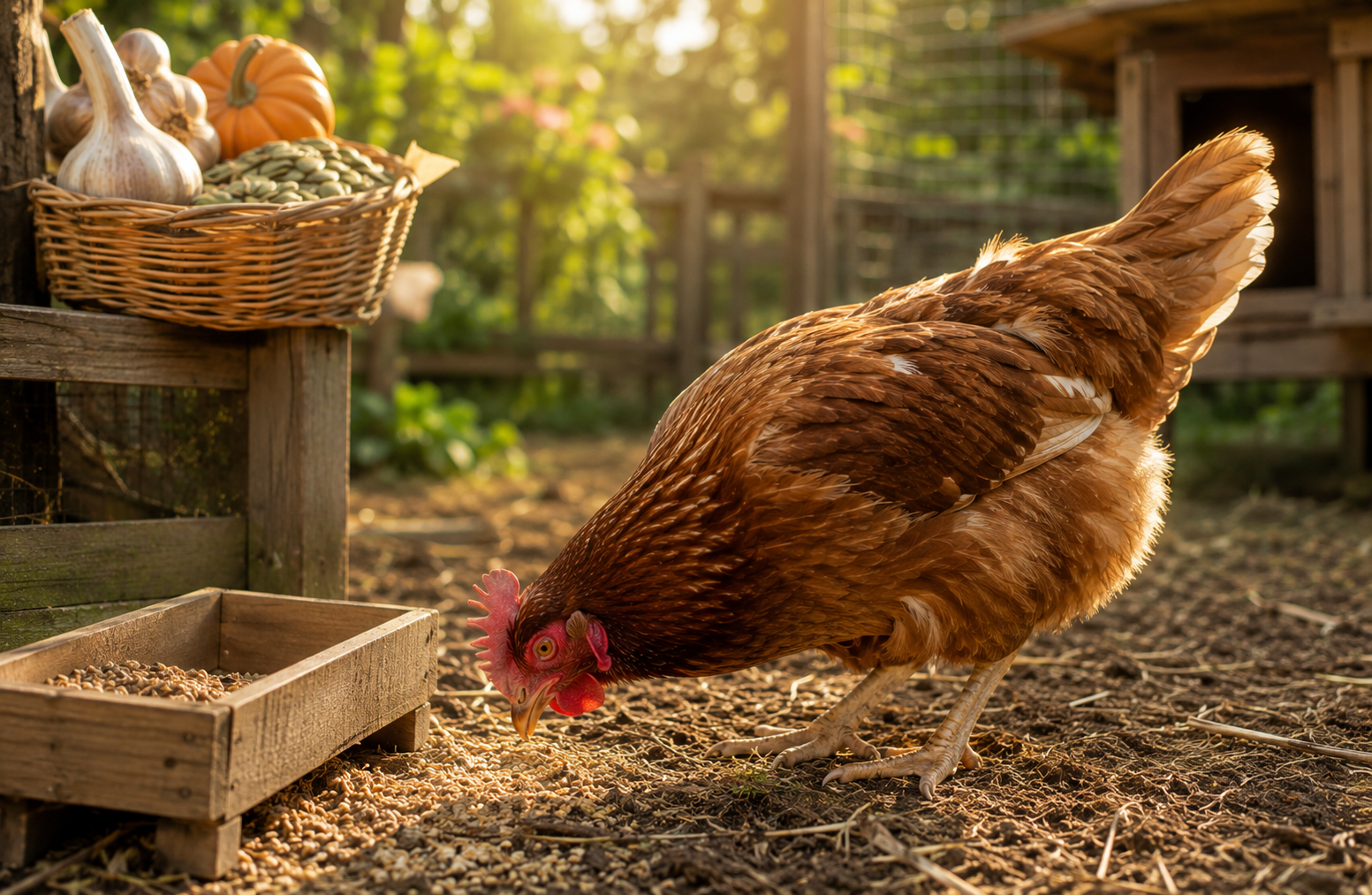
Pumpkin seeds are probably the most repeated natural dewormer claim in poultry keeping. The theory rests on cucurbitin, a compound in raw pumpkin and squash seeds that’s been shown, in a general sense, to interfere with tapeworm reproduction. That sounds promising until you look at what happens when it’s actually tested in laying hens directly. A controlled study run through Auburn University fed hens powdered pumpkin seed and compared their worm counts against untreated birds. The result: no statistically significant difference. The seeds didn’t reduce worm burden any better than doing nothing at all.
Wormwood was tested in that same study, alongside the pumpkin seed, and came back with the same disappointing result — no measurable effect on worm counts. Wormwood’s reputation comes from thujone, a compound with genuine neurotoxic properties. It’s not a gentle herbal aside; used regularly or in excess, thujone can cause muscle spasms and convulsions in the birds themselves, not just the parasites. If you’re going to let chickens self-regulate their intake by growing it at the edge of the run, that’s a reasonable way to limit exposure — but it’s worth being honest that this is a plant with real toxicity, not a harmless folk remedy.
Garlic gets recommended constantly, usually crushed into drinking water on the theory that its sulfur compounds disrupt developing parasite eggs. No controlled poultry study has confirmed this actually reduces worm counts. And garlic isn’t risk-free at higher doses — overuse has been linked to gut disruption and red blood cell damage that can lead to anemia in chickens, so “more must be better” isn’t a safe assumption here.
Diatomaceous earth, often shortened to DE, might be the most misunderstood remedy of the bunch. The logic behind feeding it internally borrows directly from how it works externally: DE’s sharp, microscopic structure physically damages the exoskeletons of external parasites like mites and lice, drying them out. The problem is that this mechanical action depends on a dry environment — exactly what a chicken’s digestive tract is not. Once DE gets wet, it loses the physical property that makes it effective against external pests in the first place. Nobody has been able to convincingly explain a separate mechanism by which it would work internally, and no controlled study has demonstrated that it does. Where DE does have real, better-supported use is externally — in dust baths and bedding, where it can genuinely help control mites and lice.
Apple cider vinegar, oregano oil, and fenugreek round out the usual list, generally justified by vague references to “antimicrobial properties.” None of these have been tested specifically against the intestinal parasites that actually affect chickens, which means the claims are extrapolated from unrelated research rather than demonstrated in the animal they’re being recommended for.
Why So Many Chicken Keepers Are Convinced These Remedies Work
If the evidence is this thin, why does “I feed pumpkin seeds and never have worm problems” show up in nearly every thread on the topic?
The honest answer is that anecdote and effectiveness get confused constantly, and it’s an easy trap to fall into. A flock that never develops a heavy worm burden might simply have low exposure to parasite eggs in their environment, solid management practices, or decent natural resistance that has nothing to do with whatever supplement was in the feed that week. When chickens stay healthy, keepers naturally credit whatever they were doing at the time — and if that happened to be pumpkin seeds, pumpkin seeds get the credit, whether or not they deserve it.
This is compounded by the fact that most of these remedies do offer some general nutritional value. Pumpkin seeds and flesh are a perfectly fine occasional treat. Garlic, in modest amounts, supports gut bacteria. A chicken that’s generally better nourished does have a stronger immune system, which genuinely does help it tolerate a low parasite load better — but that’s a different claim than “this specific ingredient killed the worms,” and it’s an important distinction if you’re actually trying to manage a real infestation rather than just support general health.
What Actually Has Evidence Behind It
If natural remedies aren’t reliably killing worms, what does?
Start with a fecal test, not a guess. A fecal float test through a vet or agricultural extension office tells you whether your flock actually has a worm problem worth treating, and often identifies which type of worm you’re dealing with. This single step prevents two common mistakes: treating birds that don’t need it, and assuming a remedy worked when the flock never had a significant burden to begin with.
Use a dewormer with real evidence and appropriate guidance. In the United States, the only two dewormers actually FDA-approved for chickens are piperazine and hygromycin-B. Piperazine works against large roundworms specifically, paralyzing adult worms so they’re expelled in droppings, though it requires a repeat treatment seven to ten days later to catch worms that matured after the first dose. Hygromycin-B covers a broader range — capillary worms, cecal worms, and large roundworms — though as an antibiotic, it comes with the broader concerns around antibiotic use that any responsible flock manager should weigh.
Fenbendazole (sold as Safe-Guard or Panacur) is the dewormer most commonly used in backyard flocks in practice, despite not being officially approved for chickens specifically. It’s effective against most worm species and is used under veterinary or extension guidance, with attention paid to appropriate egg withdrawal periods before eggs are considered safe to eat again. Albendazole is another option worth knowing about, since it’s one of the few dewormers effective against tapeworms as well as roundworms — a real advantage, since tapeworm infections are notoriously resistant to many common treatments.
Whichever dewormer route you take, resistance is a real, documented risk. Using the same chemical class repeatedly over time — generally somewhere in the range of eight to ten generations of worms — allows resistant populations to build up, which is exactly what’s already happened with piperazine in many flocks after decades of use. Rotating chemical classes, not just brand names, is the way to slow that process down.
Recheck after treatment. A second fecal test after deworming confirms the treatment actually worked, rather than assuming it did because the chickens look fine. Worms don’t always cause obvious symptoms even at a fairly high burden, so appearance alone isn’t a reliable check.
The Prevention Steps That Are Actually Worth Your Time
Here’s the genuinely good news in all of this: while the supplements don’t have evidence behind them, basic management practices absolutely do, and they matter more than any additive ever could.
Keep bedding dry, since most parasite eggs and larvae need moisture to develop into an infective stage — dry bedding disrupts that life cycle before it gets started. Rotate pasture or run areas when you’re able to, which reduces the buildup of parasite eggs and larvae in the soil over time; exposure to sunlight and air dries out and kills a meaningful portion of what’s shed into the environment. Avoid overcrowding, which concentrates fecal contamination into a smaller area and accelerates reinfection. Maintain solid overall nutrition, including adequate vitamin A, B-complex vitamins, and animal protein, since a well-fed bird’s immune system genuinely handles a modest parasite load better. Clean droppings regularly, particularly around feeders, waterers, and roosts where birds spend concentrated time. And if you’re in a wetter climate, know that you’re working against a real disadvantage — moisture protects worm eggs and larvae from drying out, meaning more aggressive management is warranted than in a dry environment.
None of these steps are as exciting as a viral post claiming pumpkin seeds solved someone’s worm problem overnight. But they’re the interventions that actually change the odds, because they attack the part of the worm life cycle you can control — the environment — rather than relying on an unproven mechanism inside the bird.
KEY TAKEAWAYS
Most of what circulates as “natural deworming” advice for chickens is built on plausible-sounding mechanisms and genuine enthusiasm, not controlled testing in the actual animal. The one direct study that put pumpkin seed and wormwood to the test in laying hens found neither had a measurable effect on worm counts. That doesn’t make these ingredients harmful as occasional treats, and it doesn’t mean every flock needs to be on a chemical deworming schedule — a healthy flock with good management often keeps worm numbers low without any intervention at all.
What it does mean is that if you suspect a real worm problem, guessing with garlic water or crossing your fingers with diatomaceous earth isn’t a substitute for finding out. A fecal test tells you what’s actually going on. A dewormer with real evidence behind it, used under proper guidance with attention to withdrawal periods, treats it. And the unglamorous work of dry bedding, pasture rotation, and reasonable stocking density does more to prevent the problem in the first place than anything you’ll find in the spice cabinet.
.