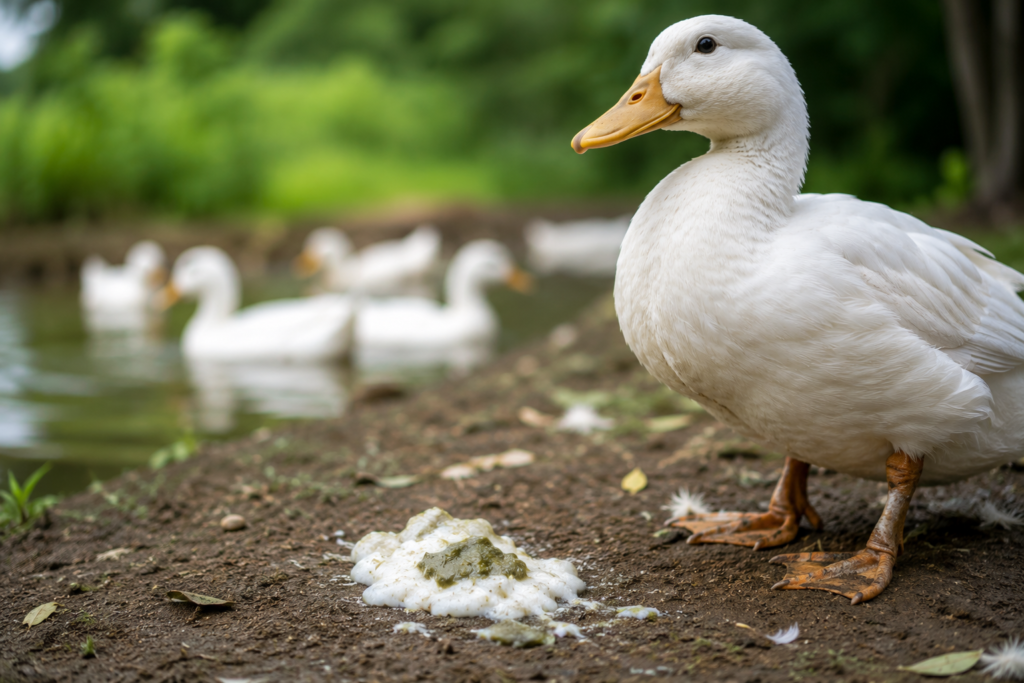
5 Vet-Approved Fixes for White, Runny Duck Dropping
White and runny duck poop is most commonly caused by normal cecal droppings (which are healthy), but it can also signal serious health issues like bacterial infections, viral diseases, liver dysfunction, or parasitic infestations. If the white diarrhea is accompanied by lethargy, loss of appetite, or green/yellow discharge, it is an emergency condition. In this article, I will break down exactly what your duck’s droppings are telling you and when you need to act. What You Need to Know Duck poop is surprisingly complex, and not all white droppings are a cause for panic. Ducks actually produce two distinct types of poop: 1-Intestinal Droppings 2- Cecal Droppings Feature Intestinal Droppings Cecal Droppings Origin Small intestine and large intestine Cecum (paired ceca) Frequency Most droppings (about 80–90%) Usually 1–3 times per day Appearance Firm, tubular or coiled Soft, pasty, sticky Color Brown, green, or tan with a white urate cap Dark brown to chocolate brown, whitish yellow or even black White Urates Usually present on top Usually absent or very little Odor Mild Stronger, more pungent odor Consistency Well-formed Semi-liquid, pudding-like Contents Undigested food residues and uric acid Fermented material(Fber), bacteria, and cecal contents Think of your duck’s digestive system like a house with two bathrooms. One bathroom (the intestines) is used constantly throughout the day and produces the normal, firm, brownish-green droppings. The other bathroom (the ceca) is only used occasionally, usually in the morning, and produces a much softer, frothy, whitish-yellow “poop” that looks completely different. However, when white, runny droppings are produced constantly (not just occasionally), or when they are accompanied by other symptoms like lethargy or loss of appetite, it means something is wrong. As a veterinarian, I see duck owners panic over normal cecal droppings, but I also see them ignore dangerous white diarrhea until it is too late. Let’s learn the difference. The 5 Main Causes of White and Runny Duck Poop 1. Normal Cecal Droppings (The “False Alarm”) This is the most common reason duck owners panic unnecessarily. Ducks have two blind pouches at the junction of their small and large intestines called ceca. These pouches ferment fibrous material and are emptied only every 3 to 4 hours, usually in the morning. 2. Bacterial Infections (The Dangerous Culprit) When white, runny diarrhea is produced constantly (not just occasionally), bacterial infection is the prime suspect. Common pathogens include: The Science: These bacteria damage the intestinal lining, preventing proper absorption of nutrients and water. The white color often comes from excess urates (the white part of bird poop) mixing with watery intestinal contents, or from undigested fats that the damaged gut cannot absorb. 3. Viral Diseases (The Silent Killers) Several viral infections cause severe white or greenish-white diarrhea in ducks: The Vet Reality: Viral diseases are often fatal and highly contagious. There is no specific cure; treatment is supportive (fluids, warmth, nutrition) while the duck’s immune system fights the virus. Prevention through biosecurity and vaccination (where available) is critical. 4. Liver Disease and Dysfunction The liver is responsible for processing bilirubin and other pigments that give poop its normal brownish-green color. When the liver is damaged or diseased, these pigments are not processed correctly, and the droppings turn pale, white, or clay-colored. 5. Parasitic Infestations Internal parasites can damage the intestinal lining and cause malabsorption, leading to white, runny droppings. Clinical Insight: The Veterinarian’s Perspective From the Merck Veterinary Manual:“Abnormal fecal consistency and color in waterfowl can indicate a variety of infectious and non-infectious diseases. White, watery droppings may be associated with bacterial infections such as pasteurellosis (fowl cholera), colibacillosis, or salmonellosis. Viral diseases including duck viral enteritis and duck virus hepatitis also cause characteristic diarrhea. Differentiation from normal cecal droppings is essential; cecal droppings are typically passed once or twice daily, are frothy and brownish-yellow, and the bird otherwise appears healthy. Persistent white diarrhea accompanied by depression, anorexia, or increased mortality warrants immediate veterinary investigation and diagnostic testing including bacterial culture, PCR for viral pathogens, and fecal flotation for parasites.” From Blackwell’s Five-Minute Veterinary Consult (Avian) & Diseases of Poultry:“When evaluating abnormal droppings in domestic waterfowl, the clinician must first distinguish between normal cecal evacuation and pathological diarrhea. Hepatic disease can result in acholic (pale, clay-colored) feces due to impaired bilirubin metabolism. Bacterial enteritis commonly produces white, watery droppings with high urate content. Diagnostic workup should include fecal examination, bacterial culture and sensitivity, and assessment of liver enzymes. Supportive care with fluid therapy, nutritional support, and appropriate antimicrobials (based on culture results) is indicated for infectious causes.” What this means for you: The textbooks are unanimous: you cannot diagnose the cause of white poop just by looking at it. You must observe the whole duck. Is she acting normal? Eating? Drinking? Or is she huddled, fluffed up, and refusing food? The difference between normal cecal droppings and deadly duck plague could be just one symptom, so observation is critical. Chart Of Differential Diagnosis Disease Cause Age Affected Droppings Key Clinical Signs Distinguishing Features Diagnosis Pullorum Disease Salmonella Pullorum Mainly ducklings (<3 weeks) Chalky white, pasty diarrhea Depression, huddling, vent pasting, weakness, high mortality Classic white diarrhea with pasted vent in young birds Culture, PCR, serology Salmonellosis (Paratyphoid) Salmonella Typhimurium, S. Enteritidis, etc. All ages (young more susceptible) White, yellow, or green diarrhea Septicemia, dehydration, swollen joints, reduced growth Less vent pasting than Pullorum; may have enlarged liver and spleen Culture, PCR Colibacillosis Avian pathogenic E. coli All ages White to watery diarrhea (occasionally) Respiratory signs, airsacculitis, septicemia, swollen joints Respiratory disease usually accompanies diarrhea Culture, necropsy Kidney Disease (Nephritis) Bacterial, viral, or toxic kidney damage All ages Mostly white urates with little feces Excessive drinking, weight loss, depression White material is urates, not true diarrhea Blood biochemistry, necropsy Visceral/Articular Gout Hyperuricemia due to renal failure All ages White chalky urates Lameness, dehydration, weakness White urates plus chalky deposits on organs or joints Necropsy, histopathology Duck Viral Hepatitis Duck hepatitis virus Ducklings (<4 weeks) Sometimes white or watery Sudden death, opisthotonos (head thrown back), tremors